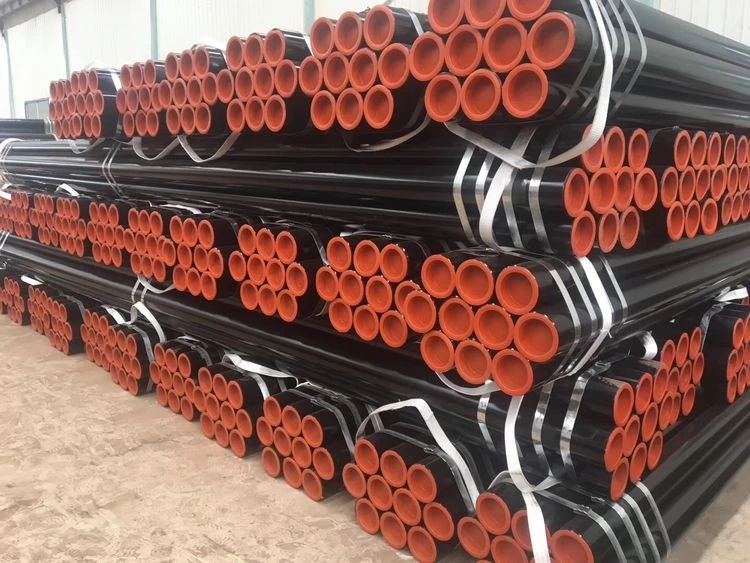
One particular kind of seamless steel pipe known for its exceptional strength and suitability for low-temperature applications is ASTM A333 GR.6 Pipe. Engineers and specifiers must have a solid understanding of the strength characteristics of ASTM A333 GR.6 because it is a material that is utilized extensively in construction, chemical processing, oil and gas, and other industries. In this blog post, we'll look at ASTM A333 GR.6 pipe's strength characteristics, compare it to other grades, and talk about the factors that affect its strength and performance.
Carbon steel seamless pipe in the grade of ASTM A333 is primarily used for low-temperature service. It is planned with an ostensible (normal) wall thickness and expected for use in low-temperature conditions where score sturdiness is significant. The strength of A333 Grade 6 line is portrayed by its base yield strength of 35,000 psi (240 MPa) and least elasticity of 60,000 psi (415 MPa).
These mechanical properties make it appropriate for conveying gas, water, and oil in both the oil and flammable gas enterprises. The material composition that enables good weldability and impact resistance even at low temperatures, typically as low as -50℃F (-45℃), is referred to as Grade 6. As a result of its combination of toughness and strength, ASTM A333 Grade 6 is the material of choice for pipelines and piping systems operating in cold environments.
How Does ASTM A333 GR.6 Pipe Compare to Other Grades in Terms of Tensile Strength?
ASTM A333 is a standard that encompasses several grades of pipes, each with different mechanical properties. Grade 6, in particular, is recognized for its high tensile strength, which is one of the key factors that set it apart from other grades.
The tensile strength of it is a measure of its ability to withstand breaking under tension. This property is compared against other grades within the ASTM A333 standard, highlighting the unique strength profile of Grade 6.
The high tensile strength of ASTM A333 GR.6 pipe makes it ideal for applications where pipes are subjected to significant stress or strain, such as in high-pressure pipelines or structures that require support in harsh environments.

What Factors Influence the Yield and Tensile Strength of ASTM A333 GR.6 Pipe?
The synthetic arrangement, manufacturing interaction, and intensity therapy of ASTM A333 GR.6 pipe all have an impact on its strength.
The manufactured sythesis of it, which generally consolidates controlled proportions of carbon, manganese, and silicon, expects a basic part in choosing its yield and unbending nature.
The grain structure and mechanical properties of the line, including its solidarity, can be impacted by the assembling system, which incorporates the technique for rolling and the ensuing intensity therapy.
Heat treatment cycles like normalization, treating, and dousing are used to change the mechanical properties of ASTM A333 GR.6 pipe, particularly to work on its yield and versatility.
ASTM A333 Grade 6 (GR.6) line's structure, producing process, and ensuing treatment all affect its yield and rigidity. To begin, the chemical composition of the steel has a significant impact on the material's mechanical properties. The majority of ASTM A333 Grade 6 is composed of carbon, silicon, manganese, phosphorus, and other elements. For example, the steel's solidarity is straightforwardly impacted by its carbon content; Tractable and yield qualities for the most part ascend with carbon content.
Additionally, manganese works on the strength and hardenability of the steel, adding to both yield and flexibility. Furthermore, the gathering framework, which integrates methodologies like reliable or welded improvement and power treatment, expects a pressing part. Heat treatment processes like normalization or stifling and treating can change the microstructure of the steel, affecting its mechanical properties. Thirdly, the viewpoints and thickness of the line in like manner influence its fortitude credits.
Pipes with thicker walls typically have higher strength values than their counterparts with thinner walls. In the end, the testing and quality control procedures used during assembly ensure consistency with the specified mechanical properties. This ensures consistency and dependability in yield and rigidity across the ASTM A333 Grade 6 lines used in various low-temperature applications in the oil, gas, and petrochemical industries.
How is the Charpy Impact Strength of ASTM A333 GR.6 Pipe Relevant to Its Performance?
Charpy influence testing is a proportion of a material's protection from breaking under an effect load. This property is especially important for ASTM A333 GR.6 pipe because it is used in low-temperature environments.
The Charpy influence strength of ASTM A333 GR.6 pipe is a basic figure surveying its presentation in situations where unexpected changes in temperature or strain could prompt weak disappointment.
The capacity of ASTM A333 GR.6 line to keep up with its effect strength at low temperatures is a key characteristic that makes it reasonable for use in cryogenic capacity, icy investigation, and other chilly climate applications.